Vehicle control
Cockpit checks, moving off, stopping, steering, clutch control where relevant, gear selection and accurate use of the controls.
Serving Bournemouth and surrounding areas
Intensive driving lessons in Bournemouth
Focused lessons built around your current ability, with regular practice to develop safe driving skills, confidence and test readiness.
Consistent, concentrated practice
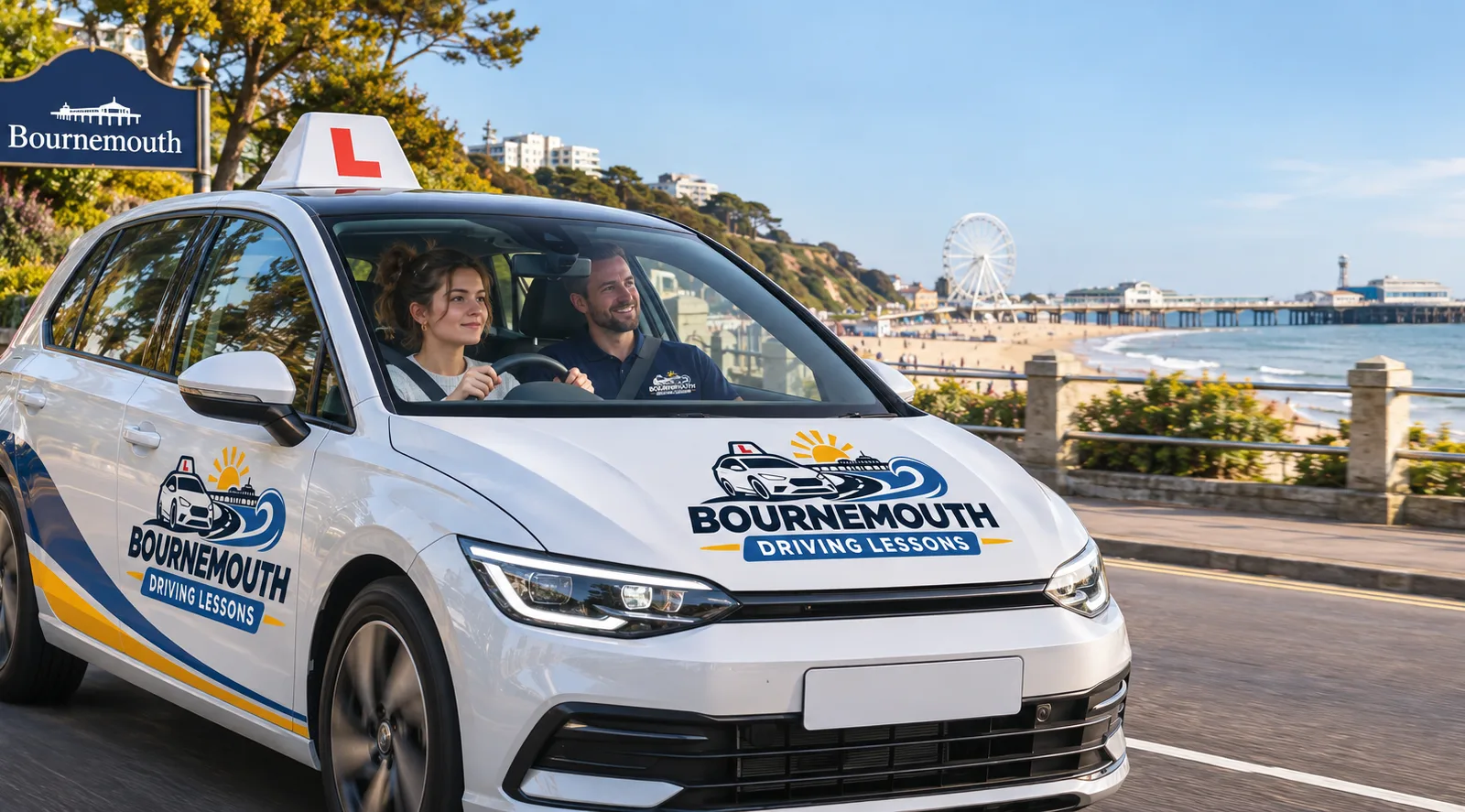
An intensive driving course in Bournemouth puts lessons close together, helping you practise consistently instead of waiting a week or more between sessions. It can suit a complete beginner, a learner with some previous experience or someone returning to driving after a break. The right course length depends on what you can already do safely and independently, not simply how soon you want to take a test.
Bournemouth's road network gives learners experience of several useful driving environments. Central routes require close observation around pedestrians, buses, cyclists and frequent junctions. Residential areas such as Winton offer practice with meeting traffic and parked vehicles, while Boscombe includes busy urban roads and varied junction layouts. Lessons may also cover dual carriageway driving where appropriate for your ability.
We are Bournemouth's driving lessons specialists, planning focused tuition around your starting point, availability and the skills that need the most attention. The aim is to make each session productive while allowing enough time for feedback, reflection and rest.
Course content
Cockpit checks, moving off, stopping, steering, clutch control where relevant, gear selection and accurate use of the controls.
Mirror routines, blind-spot checks, anticipation, safe following distances and early responses to changing road conditions.
Approach speed, lane choice, effective observation, safe gaps and correct positioning at common junction types.
Meeting and passing traffic, clearance around parked vehicles, pedestrian crossings, bus lanes, cyclists and changes in speed limit.
Controlled practice of the manoeuvres that may be requested during the practical driving test, including effective all-round observation.
Following road signs or directions from a sat nav while making safe decisions without constant prompts from the instructor.
A realistic recommendation
A useful recommendation starts with an honest assessment. A new learner may need a longer programme that builds each skill in a sensible order. Someone who has already completed regular lessons may need a shorter course focused on identified weaknesses. Previous test experience can also shape the plan, especially when recurring faults involve observation, planning, positioning or decision-making.
Course length should never be based on a guaranteed pass claim. The Driver and Vehicle Standards Agency sets the practical test standard, and the examiner assesses whether you can drive safely without assistance. Progress varies with prior experience, coordination, confidence, preparation between sessions and how readily you apply feedback.
For longer sessions, concentration matters. Planned breaks can be more productive than continuing after attention has dropped. Bournemouth fast track driving lessons should be demanding but manageable, with clear goals for each session and time to review what needs further practice.
Your route through the course
Step 1 of 5
Share any previous lesson history, licence position, practical test plans and the days when you can attend. Your provisional licence must be valid before driving on public roads.
Step 2 of 5
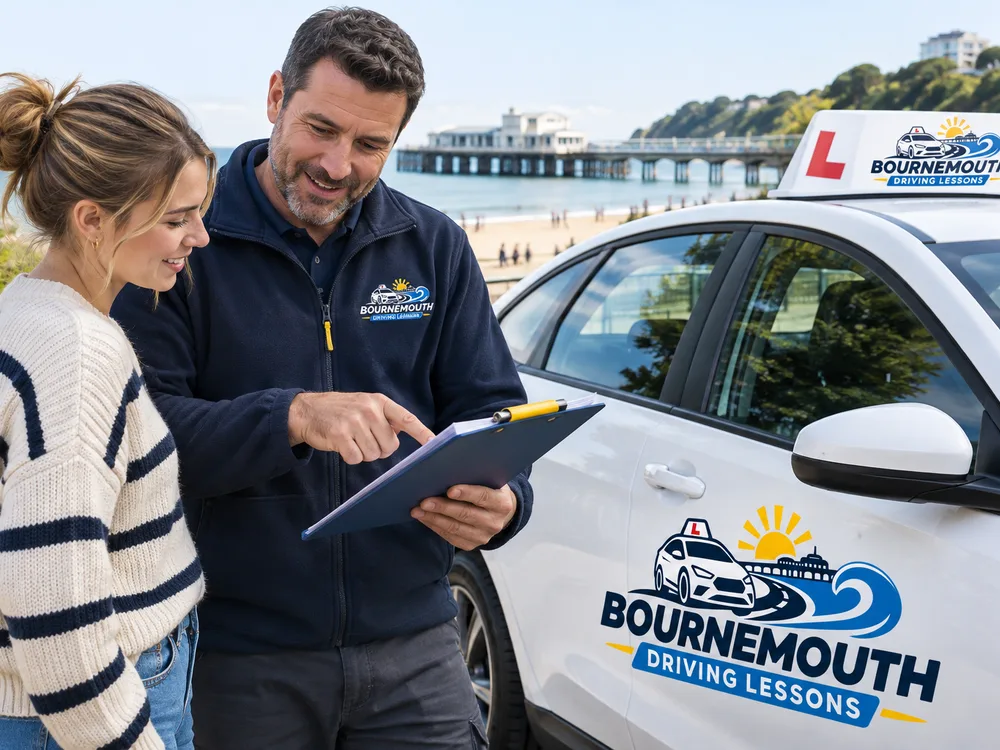
Where previous experience exists, an assessment identifies which skills are secure, which need prompting and which need to be rebuilt. Complete beginners start with the fundamentals rather than an on-road assessment.
Step 3 of 5
Sessions are arranged close together where availability allows. The plan prioritises core safety skills first, then more complex roads, manoeuvres and independent driving.
Step 4 of 5
Each lesson targets specific goals and revisits earlier skills in changing traffic conditions. Faults are explained clearly so you know what happened, why it mattered and how to correct it.
Step 5 of 5
Mock-test style driving can show whether you can maintain the required standard independently. A practical test should be considered when performance is safe and consistent, rather than because the course has reached its final scheduled hour.
Course pricing
Intensive courses in Bournemouth typically cost about £400 to £650 for 10 hours, £800 to £1,250 for 20 hours and £1,200 to £1,850 for 30 hours. These are general estimates, not fixed prices.
The final cost depends on the hours required, manual or automatic tuition, session length, instructor availability and whether test-day car use is included. Practical test fees may be separate. Your recommended hours and exact course price are confirmed after discussing your experience and, where suitable, completing an assessment.
Bournemouth road experience
Test preparation is wider than memorising a particular route. Examiners can vary directions, and temporary roadworks or traffic conditions can change what happens on the day. A well-prepared learner can apply the same routines on unfamiliar roads.
In central Bournemouth, frequent crossings, buses and lane changes reward early observation. Winton's residential streets can help develop clearance judgement and safe responses when oncoming traffic meets rows of parked cars. Boscombe offers useful experience of denser urban traffic and busy junctions, while Westbourne can require careful planning around shops, side roads and pedestrian activity.
Coastal visitor traffic can make some roads busier during holidays and fair-weather periods. That makes scanning, following distance and calm decision-making especially valuable. Lessons are adapted to your level, so exposure to complex conditions increases as your control and judgement improve.
Before you commit
Make sure you can commit to the proposed schedule. Closely spaced lessons work best when you are rested, arrive on time and have room between sessions to absorb feedback. If work, study or caring commitments make the timetable unrealistic, a less compressed plan may produce steadier progress.
Ask whether the proposed hours reflect your experience and whether an assessment is recommended. Confirm whether tuition is manual or automatic, how long each session lasts, what happens if either party needs to reschedule and what the quoted price includes. If a practical test is already booked, provide the date and test centre when enquiring, but remember that a booking does not establish readiness.
Theory preparation is separate from practical tuition. You must pass the theory test before taking the practical test, so factor that requirement into your timescale. Intensive tuition can condense practice, but it cannot guarantee a test appointment or a pass. A reliable plan is based on safe, independent performance.
Share your previous experience, preferred transmission and available dates to receive a realistic recommendation for course length and scheduling.
Call to SchedulePractical questions
Completion can range from several closely scheduled days to a few weeks, depending on the hours required and instructor availability. Your existing skill level, concentration and daily availability all affect the timetable. A practical test date is separate and depends on DVSA booking availability.
Yes, a complete beginner can take intensive lessons if the schedule and lesson length suit their concentration and learning pace. Training begins with cockpit checks and basic control before progressing to Bournemouth's residential and busier urban roads. A longer course is generally more realistic than a short refresher programme.
You can book a practical test first, but the course should not be built around an unrealistic deadline. You must have passed the theory test before taking the practical test, and local appointment availability may affect timing. Tell the instructor about any existing booking so readiness and scheduling can be discussed honestly.
Availability depends on the instructors and vehicles offered when you enquire. Confirm your preferred transmission before agreeing to a schedule because manual and automatic training lead to different licence entitlements. Passing in an automatic limits the licence to automatic vehicles, while a manual pass permits both.
The practical test fee and use of the tuition car on test day may be charged separately, so check exactly what the quotation covers. The DVSA controls test bookings and examiner availability. You should also confirm lesson hours, assessment time and any waiting time associated with test day.
Yes, previous test experience can make a focused course suitable, provided the plan addresses the causes of the result rather than concentrating only on test routes. Bring your test feedback if available. Lessons can then target recurring faults such as observation at junctions, clearance, lane discipline or response to signs.
No reputable intensive course can guarantee a practical-test pass. The examiner applies the national DVSA standard, and your result depends on safe, independent driving during the test. Focused tuition can improve preparation, but readiness must be demonstrated consistently across changing traffic and road conditions.
Plan your next step
Tell Bournemouth driving lessons about your experience, availability, preferred transmission and any booked test date. You will receive guidance on a practical course length and a focused route towards safer, more independent driving.